Orthodontic treatment is a significant investment — for patients and clinics alike. Retainers protect that investment. But clear, consistent patient education about retainer care is one of the most overlooked aspects of post-treatment protocol. Here's what every patient should hear before they walk out the door.
Why Retainer Care Matters More Than Most Patients Realise
Teeth are not fixed structures. Even after years of orthodontic treatment, they retain a memory of their original position and will begin to shift if not properly retained. A well-made retainer only works if it's worn — and it only lasts if it's cared for correctly.
Poor retainer habits are one of the most common reasons patients return to clinics needing retreatment. Setting clear expectations from the start protects the patient's outcome and reduces the likelihood of remakes and callbacks for your practice.
Wearing Schedule: The Non-Negotiable
This is the instruction patients are most likely to drift from, so it should be the first and most emphatic thing they hear.
- First 3–6 months: Full-time wear — remove only for eating, drinking anything other than water, and cleaning teeth
- After 6 months: Nightly wear as directed by your orthodontist — every single night, indefinitely
- Missing nights: Even occasional gaps can allow perceptible movement, especially in the first year post-treatment
- If the retainer feels tight: This is a warning sign — it means movement has occurred. Contact the clinic before assuming it will settle
What to tell patients: "Your retainer should feel snug but not painful. If it's difficult to seat or leaves marks, wear it more — not less. Tightness after a missed night is your teeth telling you they moved."
Daily Cleaning Routine
A retainer that isn't cleaned regularly becomes a breeding ground for bacteria, calculus and odour — and a source of patient dissatisfaction that reflects on the clinic.
Removable retainers — daily routine:
- Rinse with cold water immediately after removal — never hot, which warps the plastic
- Brush gently with a soft toothbrush and mild soap or retainer cleaner — not toothpaste, which is abrasive
- Soak weekly in a retainer cleaning tablet solution (Polident, OrthoSoak or similar)
- Rinse thoroughly before reinserting — residual cleaning solution causes irritation
- Store in the case provided — never wrapped in a tissue (it gets thrown away) or placed loose on a surface
Fixed (bonded) retainers — daily routine:
- Floss daily using a floss threader or interdental brush — the wire prevents conventional flossing
- Use a water flosser as an effective supplement, not a replacement for mechanical cleaning
- Check the wire periodically — if any bonding feels loose or the wire is no longer flat against the teeth, contact the clinic
- Avoid biting directly into hard foods with the front teeth — this is the most common cause of bond failure
Common mistake to flag: Many patients clean their removable retainer while it's still in their mouth, using toothpaste — this scratches the surface, creates harbours for bacteria and weakens the material over time. Retainers should always be cleaned out of the mouth, separately from tooth brushing.
What to Avoid
- Hot water, dishwashers or microwaves — heat distorts thermoplastic retainers permanently
- Harsh chemicals including bleach, mouthwash with alcohol or acetone-based products
- Leaving the retainer exposed to air for extended periods — saliva dehydration warps the material
- Pets — dogs are particularly attracted to retainers and will chew them instantly
- Eating with removable retainers in — food traps under the retainer, increases decay risk and strains the material
- Wrapping in napkins or leaving loose in a bag or pocket
When to Call the Clinic
Patients often wait too long before reporting a problem. Set clear expectations about when to reach out:
- The retainer no longer seats fully — even a small gap indicates movement
- A bonded wire feels loose or detached at any point
- The retainer is cracked, broken or lost
- There's persistent discomfort, soft tissue irritation or an unusual odour that doesn't resolve with cleaning
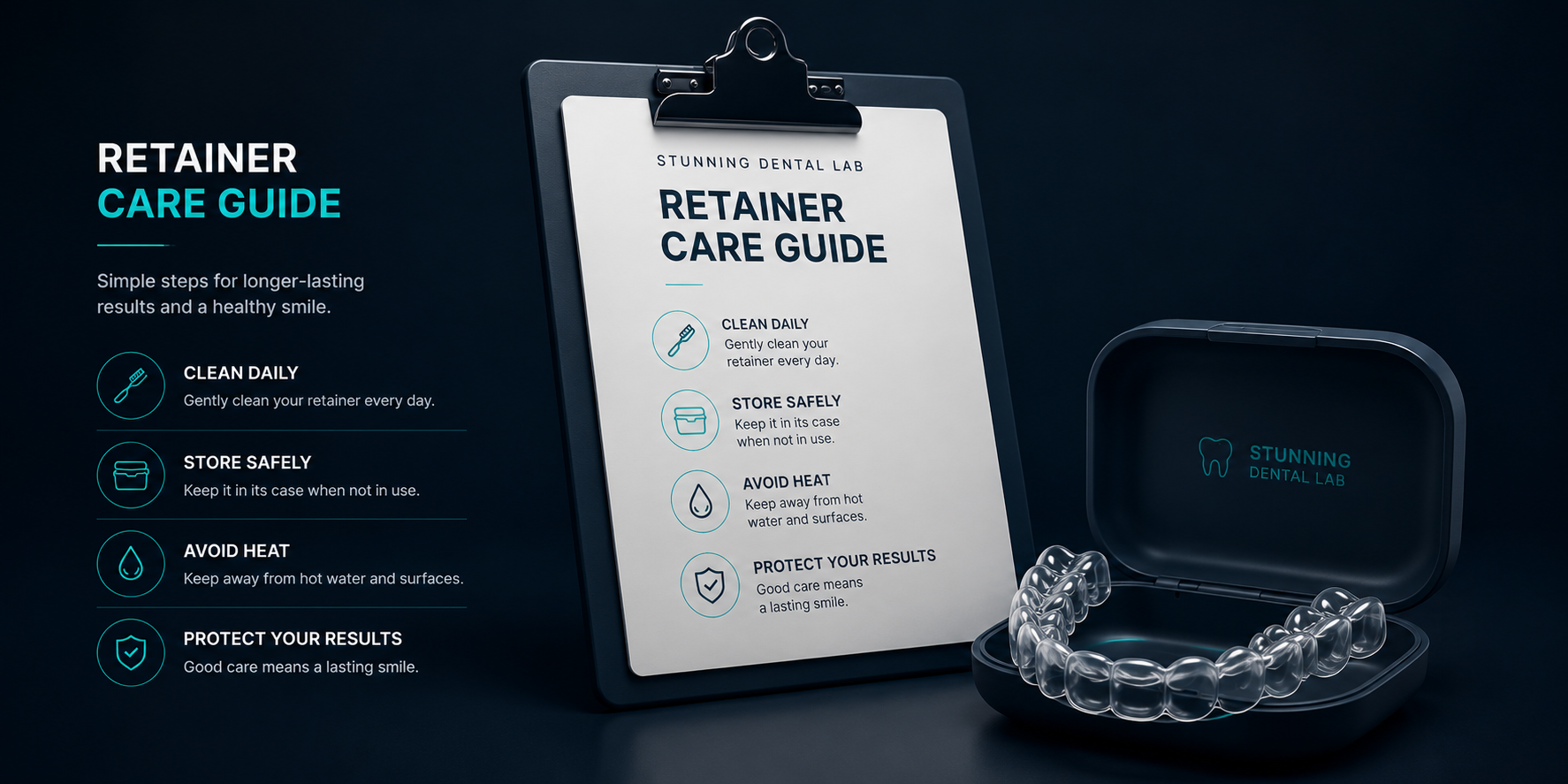
Clinic tip: A simple one-page care sheet given at the final appointment — with your clinic's name and contact details — dramatically improves compliance and gives patients a reference they can return to months later. We can help you design one that pairs with your retainer workflow.
Quick Reference: Patient Checklist
Share this summary verbally at the final appointment and consider providing it in writing:
Retainer Care — Patient Checklist
Wear full-time for the first 3–6 months, then every night thereafter
Remove before eating or drinking anything other than water
Clean with a soft brush and mild soap — never toothpaste or hot water
Always store in the case when not in use
Soak weekly in a retainer cleaning solution
If it feels tight after a missed night, wear it — and call us if it doesn't settle
Contact the clinic if the retainer is lost, broken or no longer seating properly
Consistent retainer care is simple — but only when patients know exactly what's expected. The investment you make in patient education at the final appointment pays off in better outcomes, fewer remakes, and more confident, compliant patients.